Key Takeaways:
- Shorter domains and TLDs may rank faster initially. The study showed that short domains and extensions often appeared in Google search results sooner than longer counterparts with identical content and technical setups, giving businesses an early visibility advantage.
- Domain length helps, but SEO fundamentals still matter most. A short domain can act as a catalyst for faster discovery, but long-term rankings are still driven by high-quality content, strong technical SEO, user engagement, and backlinks.
There's a question every business owner faces when choosing a domain name: does length actually matter? Common sense says shorter is cleaner, easier to remember, and more professional. But does Google agree?
For the first time in a decade, ICANN (the Internet Corporation for Assigned Names and Numbers) is opening a new application window for generic top-level domains (gTLDs) — meaning the landscape of domain choices is about to get bigger than ever. That makes the question of domain length more relevant right now than it's been in years.
Thanks to a controlled SEO study conducted by SEO Expert Kyle Roof for IMG Courses, in collaboration with GoDaddy, brand owners now have real experimental data to dig into. Here's what it revealed, and what it means for your NYC brand.
The Study
The IMG Courses gTLD & URL Length Ranking Study ran two parallel experiments across multiple domains, tracking Google SERP rankings. Every site was set up identically: the same WordPress configuration, the same SEO plugin, the same content, and Google Search Console connected with sitemaps submitted. The only variable was the domain itself.
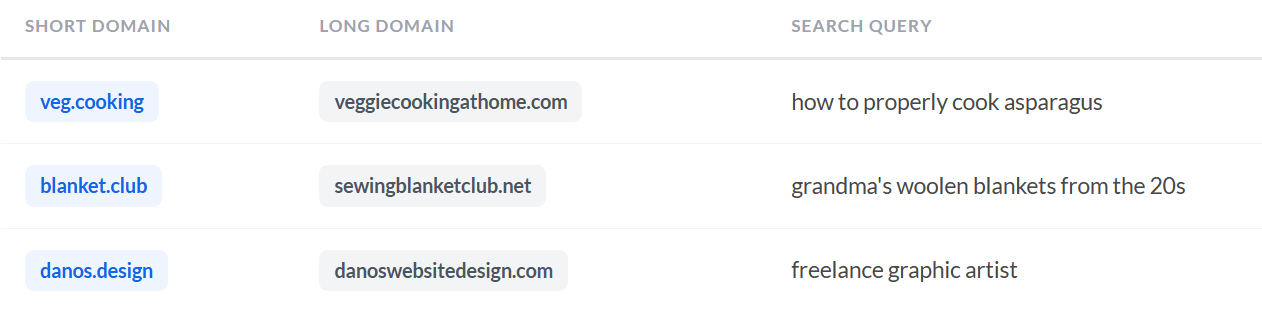
Test 2A pitted short domains against longer ones targeting identical content:
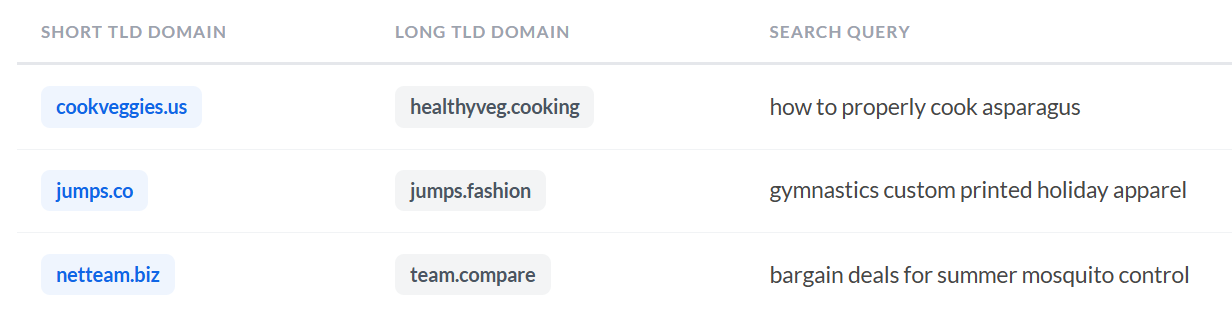
Test 2B compared short TLD extensions (.co, .us, .biz) against longer ones (.fashion, .cooking, .compare):
What the Data Showed
The results are striking, especially for new domains trying to get off the ground fast.
blanket.club hit #2 on Google on the very first tracking date. Its longer counterpart, sewingblanketclub.net, didn't appear in rankings until the second measurement period . . . and by the third, it had already slipped to position 33. The short domain got there first, and it got there fast.
In the TLD test, jumps.co ranked #1 on its first tracking date. jumps.fashion, with an identical domain name and identical content, didn't appear until months later.
The study's conclusion is measured but clear: "Shorter domains and shorter TLDs may provide early visibility." Early SERP presence is significant: it means clicks, traffic, and brand awareness while your competitors are still waiting for Google to notice them.
Why Short Domains Get an Early Edge
The study doesn't claim that a short domain will permanently outrank a longer one with better content and stronger backlinks. What it does show is a meaningful head start, and in competitive markets like New York City, getting indexed and ranked faster is a real advantage.
There are a few practical reasons this makes sense:
Crawlability and simplicity. Search engines process shorter URLs more efficiently. A clean, concise domain signals clarity: both to algorithms and to users.
Click-through rates. When your domain appears in search results, shorter names are easier to read at a glance. Users are more likely to click a URL they can immediately understand and trust.
Brand recall. A short domain is easier to say out loud, type from memory, and share by word of mouth. In a city where reputation travels fast, that matters.
Direct and indirect SEO signals. More clicks, lower bounce rates from confused visitors, and higher branded search volume all feed back into Google's ranking signals over time.
Caveat: Domain Length Is a Catalyst, Not a Cheat Code
The study is refreshingly upfront about what the data doesn't prove. Longer domains did eventually rank in some cases; the gap narrowed over time. And in a couple of test pairs, neither domain ranked at all, regardless of length.
The takeaway isn't "short domain = guaranteed rankings." It's this: given identical content and technical SEO, the shorter domain tends to gain visibility first. And when you combine a short domain with solid on-page SEO, quality content, and a strong brand, you're building on a foundation that gives you every possible advantage from day one.
As the study puts it: "TLD or domain length alone is secondary — SEO fundamentals (content, structure, and technical setup) still dominate ranking outcomes."
Where .NYC Fits In
A .nyc domain is a short domain extension, and it doubles as a geo-targeting signal. Google has long factored local relevance into search results, and a .nyc domain tells both users and search engines exactly where you operate and who you serve.
Think about what a domain like pizza.nyc, studio.nyc, or legal.nyc communicates instantly:
It's local
It's credible
It's memorable
It's short
That's a four-for-one that a long .com subdomain simply can't match. And based on the IMG Courses research, that shorter, sharper TLD may also give you a faster foothold in search results right out of the gate.
What This Means for Your Next Domain Decision
If you're launching a new NYC business, rebranding, or building a campaign-specific microsite, here's how to apply these findings:
Go short where you can. The study found that short domains delivered the earliest visible wins. Don't add extra words to your domain "just in case" — the data suggests it may actually slow you down at the start.
Choose a short TLD with purpose. Two-letter or short extensions like .nyc, .co, and .us showed faster early rankings than longer extensions like .fashion or .compare. A .nyc domain is short, relevant, and exclusive — you can only register one if you're actually based in New York.
Don't treat your domain as your only SEO lever. The study is clear that content quality and technical SEO are still the primary ranking drivers. Your domain is the foundation — what you build on it determines how high you go.
Think beyond Google. The study also highlights that short domains are simply better for branding, marketing campaigns, and user experience. Even independent of SEO, a concise .nyc domain is an asset every time someone searches for you directly, reads your business card, or hears your name at a networking event.
The IMG Courses study isn't the final word on domain length and SEO; no single study ever is. But it adds real, controlled experimental data to what was previously just common sense: shorter domains and shorter TLDs appear to gain early search visibility faster than their longer counterparts.
For New York businesses, a .nyc domain checks every box: it's short, geographically relevant, exclusive to the five boroughs, and — based on the evidence — likely to give you a faster start in search rankings than a long, cluttered alternative.
In a city that moves as fast as New York, getting that early advantage isn't a small thing. It's the whole game.